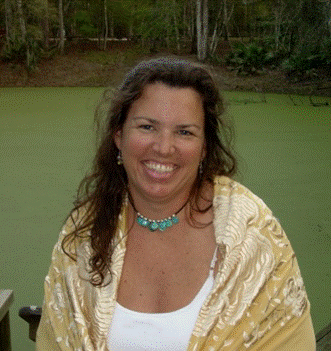
a story about searching for one’s lost tribe
Wingapo Cheskchamay (“Welcome, All Friends” in Powhatan language)
I share this excerpt from my book with you now because I have lately struck a chord in some of my posts….there are others besides me who do not feel that they fit in, and are looking for their tribe.
Being “lost” is a kind of dramatic tale to weave…..it appeals to many. There are certainly lots of stories in history of “lost tribes” and their tragic search to come home.
I am a prime example of this in a genealogical sense….I see no separation between what lives in my blood, what lives in my mind, and what lives in my heart…..the greatness of my spirit holds all aspects of myself within its hands.
However, I choose that my having been “lost” has brought me many gifts and learnings, and that in the end, I have not been “lost” at all.
An excerpt from “The Blue Eyed Indian”
By Licia Berry www.liciaberry.com
Copyright 2008
“My European ancestors were among the first to arrive at the remote barrier islands of what is now called North Carolina’s Outer Banks. In the 1500’s, the islands were alive with the Croatoan Indian hunters and fisherman who scoured the maritime forests and the rich waters for bountiful fish and game. When the fair-skinned people with the blue eyes arrived from the giant crafts on the water, my Indian ancestors were intrigued, and being polite, welcomed the visitors to their island. They feasted together, they showed the guests their lovely island (like we would for any tourist to our home town), and eventually, some of them fell in love.
Some of the fair skinned people feathered into life with the Indians; others went north to create the English settlement of Roanoke Island. This settlement later became “The Lost Colony”, when, fearing they had been abandoned by the English and needing help to survive, they returned south to live with the friendly Croatoan Indians in what is now Buxton, NC. These are the people I come from.
When the next larger waves of Europeans would arrive to the New World a generation or two later, they wrote with their quill pens in their journals of the peculiar “Blue Eyed Indians” they encountered along the North Carolina coast.
As more Europeans arrived, the goodness of the land on the Outer Banks was coveted for its rich resources and its location as a close ally to the ports in Virginia. The Indians began to feel the conflict that these fair skinned people brought into their midst. Skirmishes broke out, and eventually, the fair skinned people overtook the islands that had been occupied by Indians for 10,000 years.
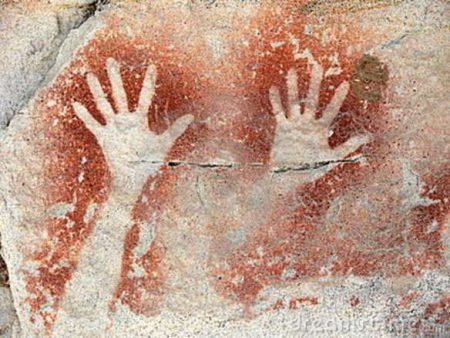
The blue-eyeds among the Indians had a choice to make; were they white, or Indian? They would lose their lands on the island if they sided with their red-skinned kin….Would they survive if they sided with their European blood? For some, the call to explore the blood of their parents or grandparents, those who had come from far across the waters, brought a certain sense of longing, and they stayed with the whites. A few elected to go with the tribes, who retreated inland to nurse their wounds and to make plans about how to carry on. Some went north to now Virginia to be absorbed into the great Powhatan nation; others remained in the woods and wetlands of inland coast and eventually disappeared into the trees with their culture. The Croatoan had lost their best fishing grounds, lost many of their children and suffered humiliation after opening their arms and hearts to these fair-skinned people. But those who were part Indian, those who elected to stay with the Europeans, lost the precious knowledge and support of their Indian culture.
Generations of Europeans came to the Outer Banks and settled on this wild coast, making their living fishing those waters once enjoyed by the Powhatan, and scavenging off of the hundreds of ships that floundered on the Diamond Shoals, earning the nickname “The Graveyard of the Atlantic”. My father’s side of the family still remains on this remote outpost, miles off the mainland of our country. They speak in a soft brogue that reminds of me of Scotland, England and a faint tongue that is lost, the language extinct except for a few words. They are stoic and stubborn, refusing to leave the island when hurricanes bear down on the fragile sands. They also don’t like to admit that they are part Indian.
In fact, I didn’t know that we had any Indian blood until I was in my thirties, when a rebellious aunt whispered to me of our history. I have observed a bigotry and arrogance in some of these noble Hatteras people, as if they are better than every one else, perhaps because of what they have survived as they eke out their livings in this harsh place. I have never understood this stubborn need to protect our “heritage” as all-European (or, all white as they would say). Perhaps when they were forced to make the decision to be “white” in order to keep their homes and land on Hatteras Island, a psychic door closed on any other possibility.
But I was different.
All of my life the spirits of the wind, the water, the rocks and trees and earth have spoken to me. As a child, I was a wild nature girl; tangled hair and dirty face were my costume….I fought taking baths and showers, preferring to remain sister to the dirt. In frustration and in answer to my defiant nature, my mother chopped all my hair off at age 6. I tried to get lost in the woods and never could, because I knew the way home. The animals were my guides and messengers. The forest whispered of its love for me. The universe supported me, and Nature was my friend.
Yet, I was so different than the family who surrounded me. I didn’t fit; when I spoke of the subtle energy that I tapped into, I was ignored or strongly corrected. I wasn’t hearing and sensing and seeing those things; I was making things up. I got quieter about my feelings, but they never went away. Under the protection of the dense brush and out of sight of my elders, I performed ceremonies to honor dead birds or lizards that I found, to listen to and guide the ghosts that needed help to find their way home, to dance with all of creation as my cohort in life. No one had taught me these things; I just knew how to do them. And then came my initiation into the shamanic world….”
Continued….